

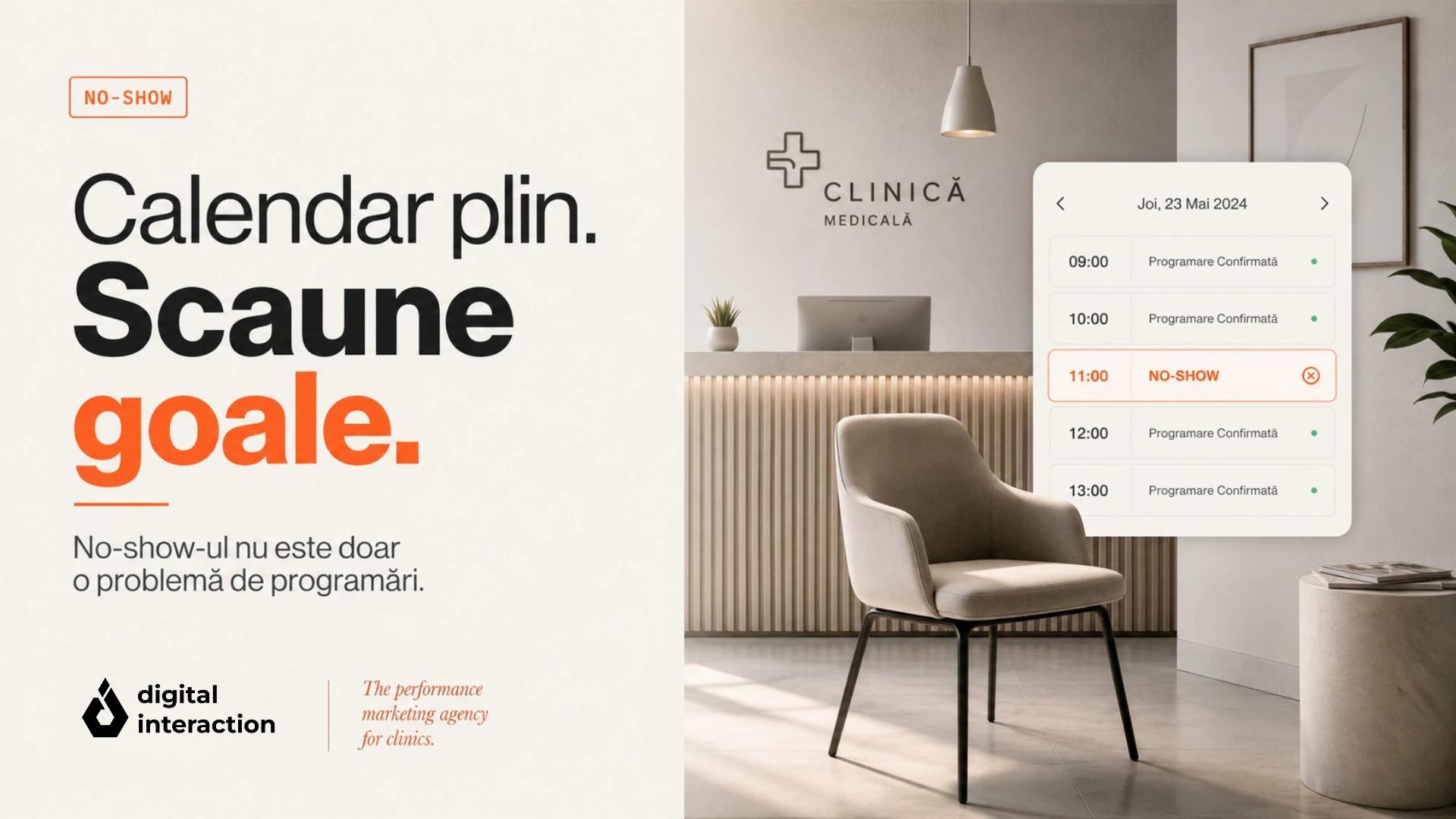
No-Shows in Medical Clinics: A Marketing Problem, Not Just a Scheduling Issue
You have invested in promoting your clinic. A patient sees your ad, visits your website, submits a form and is contacted by your reception team. The appointment appears in the calendar, and the campaign records a conversion.
On the day of the consultation, however, the patient does not show up.
From the advertising platform’s perspective, the campaign worked. From the clinic’s perspective, the doctor’s time slot remains empty, the reception team has spent time handling the enquiry, and the expected revenue is no longer there.
This is the difference between a scheduled appointment and an actual patient.
A clinic’s marketing process does not end when a patient books an appointment. It ends when the patient actually arrives at the clinic.
What Does a No-Show Mean in a Medical Clinic?
A no-show occurs when a patient has a confirmed appointment but does not attend and does not notify the clinic early enough.
This is different from a late cancellation, although the operational impact can be similar: the clinic no longer has enough time to offer the appointment slot to another patient.
A no-show means more than an empty space in the schedule. The clinic loses:
- the doctor’s allocated time;
- the reception team’s time;
- the marketing budget used to acquire the patient;
- the potential consultation revenue;
- the opportunity to book another patient;
- a potential treatment and long-term patient relationship.
A 2025 study analysing 1,118,236 primary care appointments found a no-show rate of 6.9% and a late cancellation rate of 6.8%. The amount of time between booking and the appointment was identified as the strongest predictor of missed appointments.
For a clinic, even a seemingly small percentage can create significant losses when applied to hundreds or thousands of appointments each month.
How Much Revenue Does a Clinic Lose Because of No-Shows?
You can estimate the direct financial impact using a simple formula:
Monthly appointments × no-show rate × average revenue per appointment
For example, imagine a clinic has:
- 500 appointments per month;
- an 8% no-show rate;
- an average revenue of €60 per appointment.
The result is:
500 × 8% × €60 = €2,400 per month
This only represents the direct revenue that is no longer collected. It does not include the cost of marketing, the reception team’s time or the potential value of treatments that some of these patients may have started afterwards.
The real cost of a no-show is therefore higher than the value of the missed consultation.
Why Do Many Clinics Treat No-Shows Incorrectly?
In many clinics, missed appointments are viewed entirely as a reception problem or a patient behaviour problem.
The explanations are usually simple:
“The patient forgot.”
“Reception should have called them.”
“They were not serious enough.”
These situations do occur, but they do not explain the full problem.
Between the moment a patient books an appointment and the day of the consultation, their level of interest can decline. They may find another clinic, forget the appointment details, become uncertain about the cost or decide that the medical issue is no longer urgent.
When the clinic stops communicating after the appointment has been scheduled, the booking remains only an intention.
Why Are No-Shows Also a Marketing Problem?
Healthcare marketing is not limited to advertisements, social media posts and completed enquiry forms. It includes the entire patient journey, from the first interaction with the clinic to the consultation and, eventually, the start of treatment.
The Appointment Is Not the Final Conversion
A completed form is a lead.
A contacted patient is an opportunity.
A scheduled appointment is an initial commitment.
Only a patient who actually arrives at the clinic can become a treated patient.
When campaign performance is reported only according to the number of leads or appointments generated, a clinic may believe its marketing is performing extremely well, even when a significant percentage of bookings never turn into consultations.
The relevant performance indicators are not limited to cost per lead. They should also include:
- cost per appointment;
- cost per attended appointment;
- cost per patient who starts treatment;
- revenue generated by each marketing source.
Communication After Booking Is Part of the Patient Experience
The patient should not be abandoned after agreeing to an appointment.
Confirmations, reminders, consultation information and rescheduling options are all part of the experience provided by the clinic.
An Epic Research analysis of more than 1.6 billion outpatient visits in 2024 found a no-show rate of 6.2% among patients who actively used a patient portal, compared with 7.9% among patients who did not. The difference was associated with more than 21 million fewer no-shows in one year.
The research shows an association and does not prove that patient portals were the only cause of the difference. However, it illustrates how stronger digital communication between clinics and patients may influence attendance.
Friction Reduces the Chance of Attendance
A patient may want to cancel or reschedule but may not be able to find a quick and simple way to contact the clinic.
When they need to search for the phone number, wait on hold or explain why they cannot attend, they may choose the easiest option: doing nothing.
A simple rescheduling process can turn a no-show into an appointment moved to another day.
Why Do Patients Miss Medical Appointments?
There is no single cause. In most clinics, no-shows are the result of several smaller problems.
The Appointment Is Scheduled Too Far in Advance
The more time there is between the initial enquiry and the consultation, the greater the chance that the patient will forget, change their plans or choose another provider.
The study covering more than 1.1 million appointments identified the waiting time before the consultation as the strongest predictor of missed appointments.
A marketing campaign may generate demand, but when the first available appointment is three weeks away, some patients will be lost before they ever meet the doctor.
The Patient Does Not Receive Enough Information
After booking, the patient should clearly understand:
- the date and time of the appointment;
- the doctor’s name;
- the clinic address;
- the approximate duration;
- the consultation cost, when this can be communicated;
- any documents, tests or preparation required;
- how to confirm, cancel or reschedule.
A lack of information creates uncertainty. Uncertainty reduces commitment.
The Clinic Sends Only One Confirmation
A message received at the time of booking may be forgotten when the appointment takes place several days or weeks later.
Systematic reviews indicate that electronic notifications and appointment reminders can improve attendance compared with sending no reminders.
A reminder should not be treated only as an administrative notification. It is another contact point through which the clinic maintains the relationship with the patient.
Cancelling Is Too Complicated
A patient who can no longer attend should have a simple way to notify the clinic.
A reply to an SMS, a WhatsApp message or a rescheduling link can release the appointment early enough for the clinic to offer it to someone else.
The objective is not to prevent cancellations. The objective is to turn unannounced absences into cancellations or rescheduled appointments communicated in advance.
The Advertising Message Does Not Match the Real Experience
Sometimes the problem begins with the marketing campaign itself.
When an advertisement promises fast results, unclear prices or an experience that differs from what the reception team later communicates, the patient may become uncertain after booking.
A high number of leads does not automatically mean high-quality leads.
Campaigns should attract the right patients, set realistic expectations and provide enough information before an appointment is scheduled.
How Can You Reduce the No-Show Rate in Your Clinic?
Reducing missed appointments does not depend on one reminder message. It requires a clear process that is applied consistently to every patient.
1. Measure Your Real No-Show Rate
Use the following formula:
Missed appointments ÷ total appointments × 100
Do not analyse only the clinic-wide average. Review the rate according to:
- medical specialty;
- doctor;
- service;
- patient acquisition source;
- number of days before the consultation;
- new or returning patient;
- appointment day and time.
This can help you identify whether the problem is more common for a certain service, campaign or group of appointments scheduled far in advance.
2. Track Cost per Attended Appointment
Imagine that you invest €1,000 in a campaign and generate 100 leads. Your cost per lead is €10.
However, when only 40 of these people make an appointment and just 30 attend the clinic, the real cost per attended appointment is approximately €33.
This difference shows why reporting exclusively on cost per lead can be misleading.
3. Confirm the Appointment Immediately
After scheduling the consultation, the patient should immediately receive written confirmation.
The message should include the essential information and a simple way for the patient to contact the clinic with questions.
Confirmation reduces uncertainty and gives the patient a reference they can check later.
4. Create an Appointment Reminder System
A simple communication flow may include:
- immediate confirmation after booking;
- a reminder 24 to 48 hours before the appointment;
- a short message on the day of the appointment, when appropriate;
- a clear confirmation or rescheduling option.
There is no universal frequency that works for every clinic. A routine consultation, a dental procedure and an investigation that requires preparation may each require a different communication flow.
Test different approaches and monitor what works for your patients.
5. Make Confirmation and Rescheduling Easy
A reminder that only says, “This is a reminder that you have an appointment,” is incomplete.
The patient should be able to take action:
“Reply YES to confirm.”
“Message us to reschedule.”
“Use this link to change your appointment.”
The easier the process is, the more likely patients are to inform the clinic before missing the appointment.
6. Reduce the Time Between the Enquiry and the Consultation
Review how quickly a new patient can be seen.
You may introduce:
- appointment slots reserved for new enquiries;
- a waiting list;
- a system for filling cancelled appointments;
- prioritisation based on urgency and medical specialty.
Marketing cannot compensate indefinitely for limited availability in the appointment calendar.
7. Follow Up With Patients Who Did Not Attend
A no-show should not automatically be treated as a lost patient.
Contact the patient without using an accusatory tone and offer the possibility of rescheduling. Sometimes the absence is caused by a personal situation, a misunderstanding or the simple fact that the patient forgot.
An empathetic message can bring the patient back and protect the long-term relationship.
8. Use Cancellation Policies Carefully
Deposits, fees and stricter rules may be useful for certain treatments or appointments that block a significant amount of clinical time.
However, they should not be the first solution.
Before introducing penalties, check whether:
- the appointment was confirmed clearly;
- the patient received reminders;
- cancelling was easy;
- the consultation information was complete;
- the policy was communicated before booking.
A strict policy will not repair a weak communication process.
Which Metrics Should a Clinic Monitor?
To understand the real performance of marketing and reception, monitor the following indicators each month:
- no-show rate;
- late cancellation rate;
- appointment confirmation rate;
- rescheduling rate;
- average waiting time before the consultation;
- cost per lead;
- cost per appointment;
- cost per attended appointment;
- percentage of patients who start treatment;
- revenue lost through missed appointments.
These indicators should be analysed together.
A campaign with a higher cost per lead may be more profitable when it attracts patients who attend and begin treatment. At the same time, a campaign that generates inexpensive leads may consume both marketing budget and reception time without producing enough real patients.
Who Is Responsible for Reducing No-Shows?
No-shows are not only the responsibility of the reception team.
Marketing attracts the patient and shapes their initial expectations. Reception turns the enquiry into an appointment. The communication system maintains the relationship until the consultation. Management reviews the data and removes problems from the process.
The result depends on collaboration between:
- the marketing team;
- reception;
- doctors;
- management;
- the appointment system;
- communication tools.
When every department monitors only its own conversion point, the patient can be lost between stages.
An Appointment Is Not the Final Result
A full calendar does not automatically mean a profitable clinic.
A lead is not a patient. An appointment is not a consultation. And a consultation does not automatically become a treatment.
Effective healthcare marketing monitors the complete patient journey, from the advertisement and initial enquiry to clinic attendance and the start of treatment.
Reducing the no-show rate does not necessarily require a larger advertising budget. In many cases, it means making better use of the patients your marketing already generates.
At Digital Interaction, we do not analyse only how many leads a clinic receives. We also examine what happens after the conversion and build processes that turn more enquiries into appointments, attended consultations and started treatments.